
What Does Good Weed Look Like? The Details Behind Premium Cannabis Flower
Not every cannabis flower looks, smells, or feels the same.
Some buds display deep purple tones and dense layers of resin glands. Others have bright green structures, vibrant orange pistils, and distinctive aromatic profiles.
But what does good weed look like, and which characteristics actually separate premium cannabis flower from lower-quality products?
At Walt Herb Co., the conversation about cannabis quality goes beyond appearance alone.
From genetics and cultivation to trimming, curing, and preservation, there are several important factors worth understanding.
Premium Cannabis Starts Long Before Harvest
The appearance of finished cannabis flower is influenced by decisions made throughout cultivation.
Genetics contribute to a plant’s structure, colour, aroma, and potential chemical composition.
Growing conditions also play a role in how the plant develops.
However, even promising genetics cannot compensate for every problem that may occur during harvesting, drying, curing, or storage.
This is why evaluating premium flower means looking at the entire production process rather than judging a bud by its appearance alone.
1. Trichome Coverage: The Frosty Appearance
One of the most recognizable features of many premium cannabis flowers is their sparkling surface.
This effect comes from trichomes, specialized structures that contain many of the plant’s cannabinoids and aromatic compounds.
When viewed closely, glandular trichomes may resemble tiny crystals scattered across the flower.
A substantial layer of intact trichomes can be an appealing visual characteristic.
However, trichome density alone does not establish product quality, potency, or safety.
The chemical composition and condition of the flower are equally important.
2. Bud Structure: Dense Isn’t Always Better
Cannabis flower structure varies considerably between cultivars.
Some genetics naturally produce compact, tightly grouped buds, while others develop more elongated or open flower formations.
Both can be normal.
Although dense buds are sometimes associated with premium cannabis, density should not be treated as a universal grading standard.
Instead, look for intact structures, appropriate handling, and the absence of obvious damage or contamination.
An attractive bud should also be evaluated for its aroma, texture, and overall condition.
3. Colour: More Than Just Green
Cannabis can display a remarkably diverse range of colours.
Rich green tones, purple pigmentation, and orange pistils can all occur naturally.
Purple hues are often associated with anthocyanin pigments, while orange or reddish pistils are part of the flower’s reproductive structures.
These characteristics contribute to visual diversity, but none automatically indicate superior potency.
A colourful flower isn’t necessarily a more powerful flower.
Similarly, a green cultivar isn’t inherently lower quality than a purple one.
4. Aroma: A Window Into the Terpene Profile
Aroma is one of the most distinctive characteristics of cannabis flower.
Different cultivars may feature combinations of earthy, citrusy, pine-like, floral, or pungent notes.
These aromas are influenced in part by terpenes, which contribute to the plant’s chemical complexity.
A recognizable, cultivar-appropriate aromatic profile can be a useful quality characteristic.
However, a stronger scent does not always indicate higher THC levels.
And any aroma resembling mildew, damp cardboard, or mold should be treated as a potential warning sign rather than a desirable strain characteristic.
5. Drying and Curing: The Importance of Post-Harvest Care
The journey from harvested cannabis to finished flower involves multiple post-harvest stages.
Drying reduces moisture, while curing involves controlled storage and ongoing changes in the flower.
These processes can influence the final product’s moisture content, aroma, and physical characteristics.
Poor handling can produce flower that becomes excessively brittle or retains problematic moisture.
Careful post-harvest management is therefore an important part of cannabis quality.
A premium-looking bud still requires appropriate drying, curing, and storage.
Understanding AAAA and Top-Shelf Cannabis
Consumers may encounter terms such as AAA, AAAA, craft cannabis, and top-shelf weed when exploring flower categories.
These descriptions are commonly used to communicate perceived differences in quality and presentation.
However, AAAA is not a universally standardized laboratory quality grade.
Different sellers may apply their own criteria when using these classifications.
For that reason, shoppers should look beyond the grade name and consider product information, testing, appearance, and handling.
A higher-sounding classification isn’t a substitute for transparent product details.
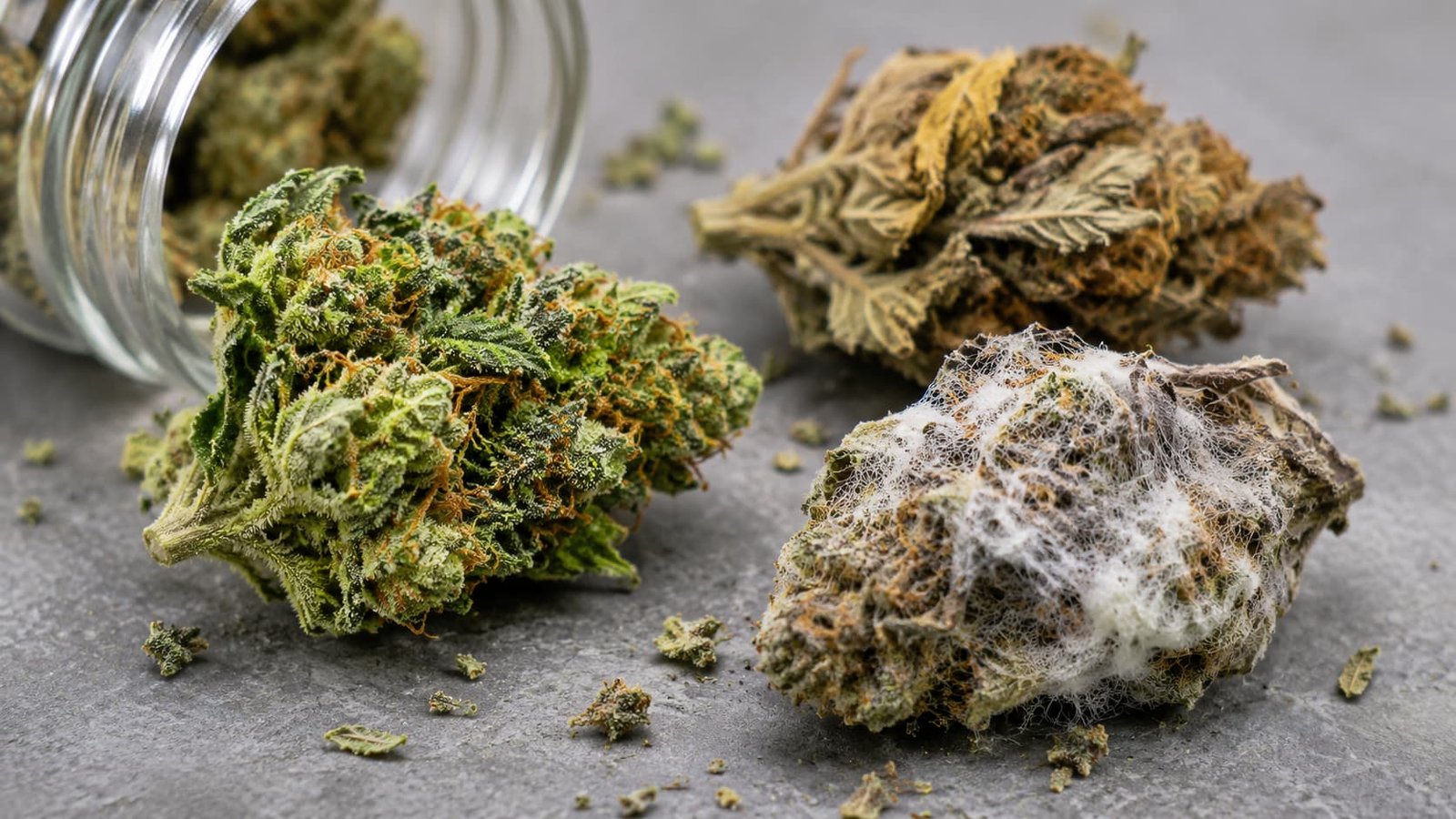
Good Weed vs. Bad Weed: Key Differences
| Characteristic | Quality Indicators | Warning Signs |
|---|---|---|
| Trichomes | Intact, visible resin glands | Unexplained fuzzy growth |
| Aroma | Distinctive, cultivar-appropriate scent | Musty or mildew-like odor |
| Texture | Appropriately dried flower | Excessively damp or unusually brittle |
| Appearance | Natural colour and intact structures | Suspicious patches or contamination |
| Handling | Proper storage and packaging | Exposure to unsuitable environmental conditions |
These visual and sensory characteristics can help consumers evaluate flower, but they cannot replace laboratory testing for contaminants.
Is High THC the Same as High Quality?
Not necessarily.
THC percentage is one measurement of cannabinoid concentration, not a complete description of flower quality.
Two cannabis products with similar THC values can differ in aroma, cannabinoid composition, moisture content, and overall condition.
Likewise, a flower with a higher THC percentage is not automatically better cultivated or more carefully handled.
A more complete quality assessment considers multiple characteristics rather than focusing on a single number.
How to Preserve Premium Flower Characteristics
Even carefully cultivated cannabis can lose some of its original characteristics during storage.
Exposure to heat, light, and oxygen may contribute to cannabinoid degradation and changes in aroma.
Moisture management is also important because excessively damp conditions may support microbial growth.
Following product-specific storage instructions helps protect the flower’s characteristics.
Cannabis should also be kept securely stored and inaccessible to children and pets.
Frequently Asked Questions
What makes cannabis top-shelf?
Top-shelf is an informal quality description generally associated with desirable flower characteristics, careful handling, and overall presentation. It is not a standardized scientific certification.
Is purple weed better than green weed?
No. Purple pigmentation can be a natural characteristic of certain cannabis genetics, but colour alone does not establish quality or potency.
Does more frost mean stronger cannabis?
Not automatically. Visible trichomes can indicate resin gland coverage, but appearance alone cannot accurately determine THC concentration.
Can premium cannabis go bad?
Yes. Cannabis can undergo chemical degradation over time, and improper storage can create conditions associated with contamination.
What does low-quality weed look like?
Possible indicators include excessive dryness, damaged flower structures, inconsistent handling, or suspicious discoloration. Visible mold-like growth is a more serious concern and should not be ignored.
The Walt Herb Co. Perspective on Quality
Premium cannabis is not defined by one colour, one aroma, or one THC percentage.
It is the result of multiple factors coming together, from genetics and cultivation through post-harvest handling and preservation.
Understanding these details helps consumers appreciate the differences between cultivars and recognize the characteristics that deserve attention.
At Walt Herb Co., our interest in flower quality begins with the details that make every cultivar distinct.
Because understanding cannabis means looking beyond the label and learning what goes into the flower itself.
