
Cannabis tolerance is something that can develop gradually.
When exposure to THC becomes frequent, the body may adapt to its effects. Over time, a previously familiar amount of cannabis can produce a less noticeable response.
A period without THC can begin reversing some of these adaptations.
But what happens when you smoke weed after a tolerance break?
Does cannabis become more potent? Does your body respond differently? And should you approach cannabis flower in the same way you did before stopping?
Understanding the science behind tolerance can help answer these questions.
Why Cannabis Can Feel Different After a Break
THC interacts with cannabinoid receptors throughout the nervous system, particularly CB1 receptors.
With repeated THC exposure, the brain may respond by reducing the availability or sensitivity of certain receptors.
This is one of the biological processes associated with cannabis tolerance.
During abstinence, some of these adaptations can begin reversing.
Research published in Molecular Psychiatry found that changes in CB1 receptor availability associated with chronic daily cannabis use were reversible following approximately four weeks of monitored abstinence.
As tolerance decreases, the same amount of THC may produce more noticeable effects than before the break.
However, responses vary, and reduced tolerance does not guarantee a particular experience.
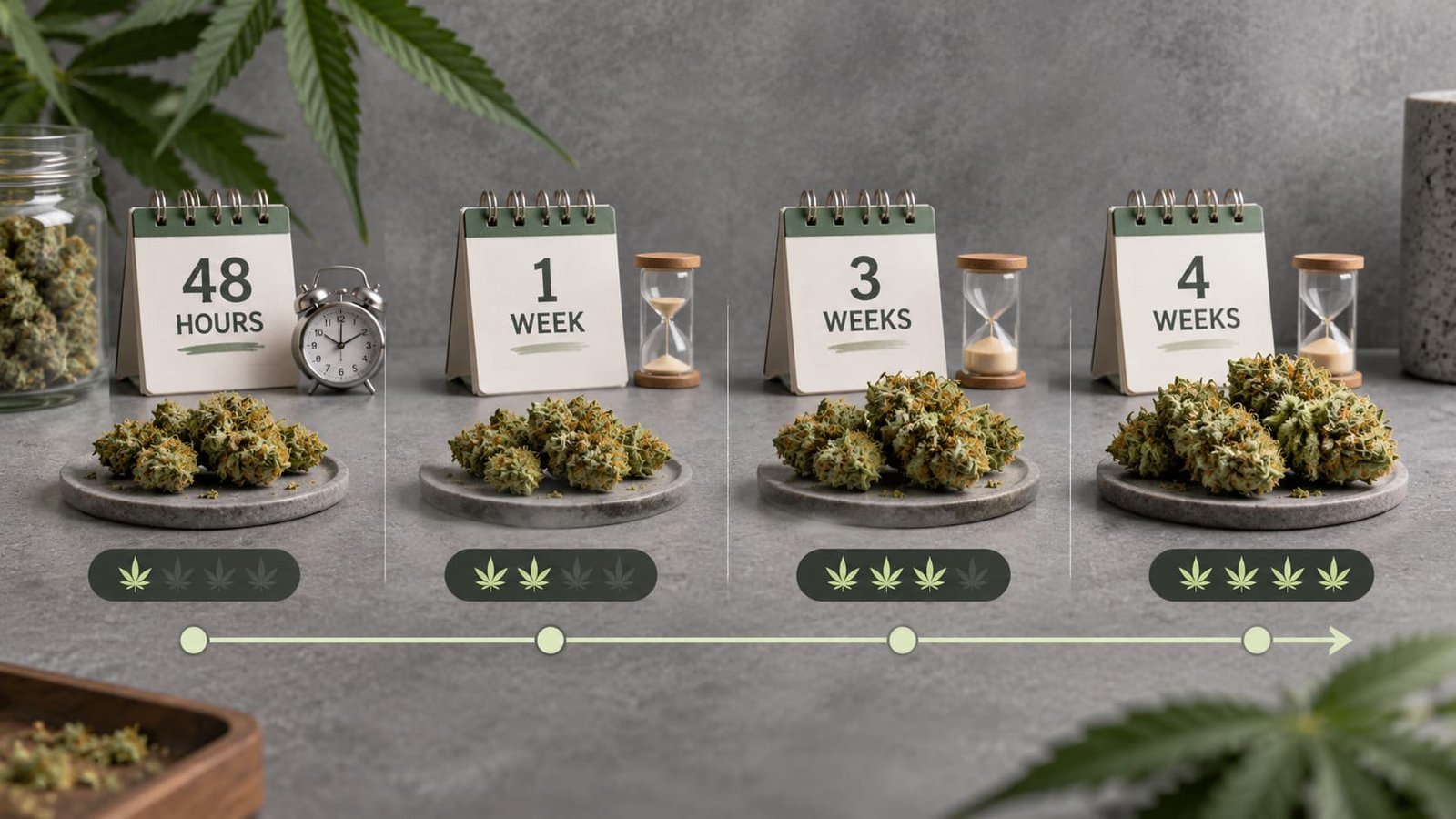
What Changes After 7, 14, or 28 Days?
Cannabis tolerance recovery doesn’t follow a universal calendar.
Some biological changes can begin within the first few days of abstinence.
Longer periods may allow additional recovery, particularly for people who previously consumed THC frequently.
Here is how to understand these intervals:
After seven days: Early receptor changes may have occurred. Some people may still be experiencing withdrawal symptoms.
After fourteen days: Certain withdrawal symptoms may have improved, although recovery varies.
After twenty-eight days: Studies in chronic users have documented substantial recovery in CB1 receptor availability.
These findings do not establish that every person’s cannabis tolerance will return to baseline after a particular number of days.
Does Cannabis Flower Become Stronger After a Break?
The flower itself doesn’t become stronger because someone stopped consuming cannabis.
Its cannabinoid concentration remains dependent on the product’s composition and storage conditions.
What may change is the individual’s response to THC.
This distinction matters.
A cannabis product with the same labelled THC concentration may produce different subjective effects before and after a period of abstinence.
The difference may reflect changes in tolerance rather than changes in the flower.
THC Percentage: Why the Number Matters
Cannabis flower can vary significantly in THC concentration.
Product labels provide information about cannabinoid content, which can help consumers understand the strength of a particular product.
However, THC percentage isn’t the only factor influencing a person’s response.
Other considerations include:
- Frequency of previous THC consumption
- Duration of the tolerance break
- Amount consumed
- Individual sensitivity
- Route of administration
- Other substances consumed at the same time
Higher-THC products are associated with increased risks of adverse effects.
After a tolerance break, using the same high-THC quantities as before can be particularly unpredictable.
What About AAAA and Premium Cannabis Flower?
Terms such as AAAA, premium, and top-shelf are commonly used to describe cannabis flower quality.
However, these are not universally standardized scientific potency classifications.
They may refer to characteristics such as appearance, trimming, aroma, or overall presentation.
A carefully handled flower can still contain a high concentration of THC.
Similarly, an attractive bud with substantial trichome coverage isn’t automatically appropriate for someone whose THC tolerance has decreased.
Flower quality and THC potency are two different considerations.
Understanding both is more useful than relying on a grade name alone.
Does Better Quality Cannabis Mean Stronger Effects?
Not necessarily.
Cannabis quality involves multiple factors, including cultivation practices, harvesting, drying, curing, storage, and testing.
Potency refers to the concentration of particular cannabinoids.
A product can be carefully cultivated without having the highest THC percentage.
Likewise, a high THC percentage does not guarantee superior flower quality.
After a tolerance break, it is especially important not to confuse a premium classification with a recommendation to consume more potent cannabis.
Why Your Previous Cannabis Routine May No Longer Fit
Tolerance isn’t the only thing that can change during a break.
People may also become more aware of the habits associated with their previous consumption.
Some notice that cannabis use was connected to particular times of day, activities, or social settings.
Others may discover that their earlier frequency of use was greater than they had realized.
Returning to exactly the same routine can lead tolerance to develop again.
For individuals choosing to continue cannabis use, Canada’s lower-risk guidelines recommend less frequent consumption and lower-THC products.
Can You Rebuild Tolerance Quickly?
Tolerance can develop again with repeated THC exposure.
The speed and degree of this process depend on consumption patterns and individual differences.
Frequent exposure to high-THC products may contribute to renewed tolerance and dependence.
Taking a break does not permanently prevent those adaptations from returning.
This is one reason that long-term consumption patterns matter more than simply completing a predetermined number of days without cannabis.
Understanding Flower Freshness After a Break
Cannabis flower can also change during storage.
Heat, light, oxygen, and inappropriate moisture conditions may affect its chemical composition and physical characteristics.
A product that has been stored for several weeks may not have exactly the same aromatic profile or texture as when it was first packaged.
However, storage-related changes are separate from changes in personal THC tolerance.
If flower shows suspicious fuzzy growth, unusual dampness, or signs of possible contamination, it should not be consumed.
Follow the product’s storage instructions and keep cannabis securely stored away from children and pets.
Can a Tolerance Break Change Your Relationship With Cannabis?
For some people, a break provides an opportunity to reconsider why, when, and how often they consume cannabis.
This can be an important part of recognizing patterns of habitual use.
A break can also reveal difficulties with controlling consumption.
If stopping cannabis causes significant distress, persistent cravings, or repeated unsuccessful attempts to reduce use, seeking professional support may be beneficial.
Cannabis dependence is a recognized health concern, and a tolerance break alone should not be treated as a substitute for appropriate care.
Frequently Asked Questions
Will weed feel stronger after a tolerance break?
It may. Reduced THC tolerance can make previously familiar amounts produce more noticeable effects, although individual responses differ.
Is 21 days enough to reset cannabis tolerance?
Twenty-one days is a commonly used educational framework, but it is not a guaranteed reset period for everyone.
Does smoking a different strain prevent tolerance?
No. If the new strain contains THC, continued exposure can still contribute to tolerance.
Should you use stronger weed after a tolerance break?
No. Reduced tolerance can increase sensitivity to THC, and higher-potency products carry greater risks of adverse effects.
Does THC tolerance affect everyone equally?
No. Individual physiology, previous exposure, product potency, and consumption frequency all influence tolerance.
Can you lose tolerance and still have THC in your system?
Yes. Receptor adaptations and the persistence of detectable THC metabolites are different processes.
Final Thoughts: Understanding the Flower and Your Response to It
A cannabis tolerance break can change how someone responds to THC, but it doesn’t change the underlying potency of the flower.
This distinction is essential when evaluating cannabis after a period of abstinence.
Product quality, cannabinoid concentration, and individual tolerance are related considerations, but they should not be treated as interchangeable.
At Walt Herb Co., understanding cannabis flower means looking beyond appearance and recognizing how the plant’s characteristics interact with individual consumption patterns.
A better understanding of THC, tolerance, and flower quality supports more informed decisions about cannabis.
Educational content for adults 19+ in Ontario. Cannabis can cause impairment, dependence, and other adverse health effects.
